Resources / Ambient Sensing
The Five Pillars of Ambient Sensing
Understand a day, not a data point.
Ambient sensing means the living environment does the observing, so nobody has to remember anything, wear anything, or answer a device. Five kinds of everyday signal, blended into the background of life, and fused into one picture of how a person is actually doing.
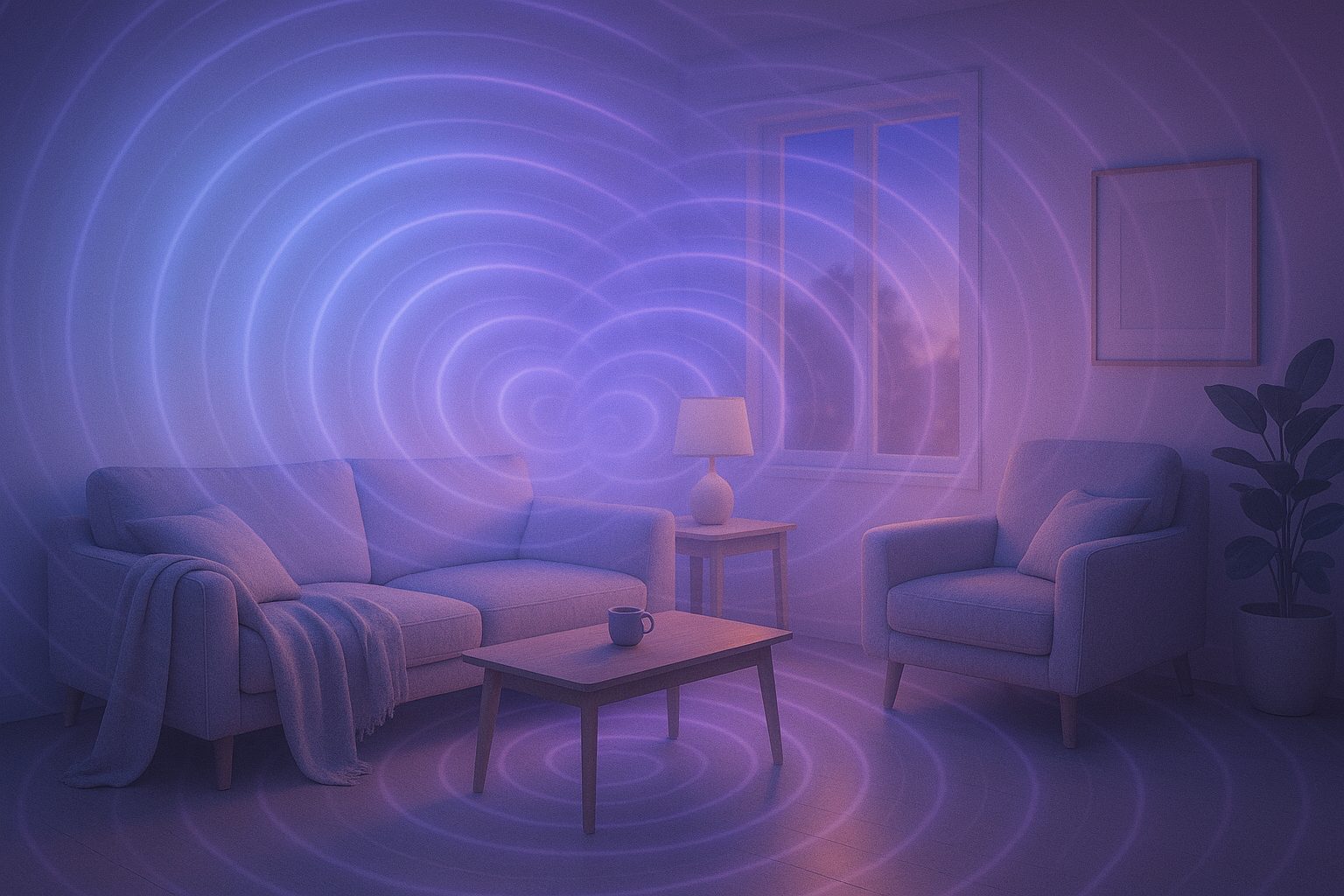
What makes it ambient
The instrument is the place, not the person.
Most health technology asks something of the person being helped. Charge this, wear this, press this, log this. Every one of those asks is a point where the data stops, and it stops soonest for the people who need it most.
Ambient sensing inverts that. The room reports, continuously, whether anyone is thinking about it or not. There are no cameras and no microphones listening to conversation. What is measured is pattern: movement, rest, room use, and the timing of ordinary things. Wearables are welcome and optional, so a person who already wears a watch contributes more, and a person who never would still gets the full service.
The framework
Five pillars, and why each one earns its place.
A wellbeing picture built on fewer than these five has a hole in it, and the hole is always in the same place: the thing that was hardest to measure.
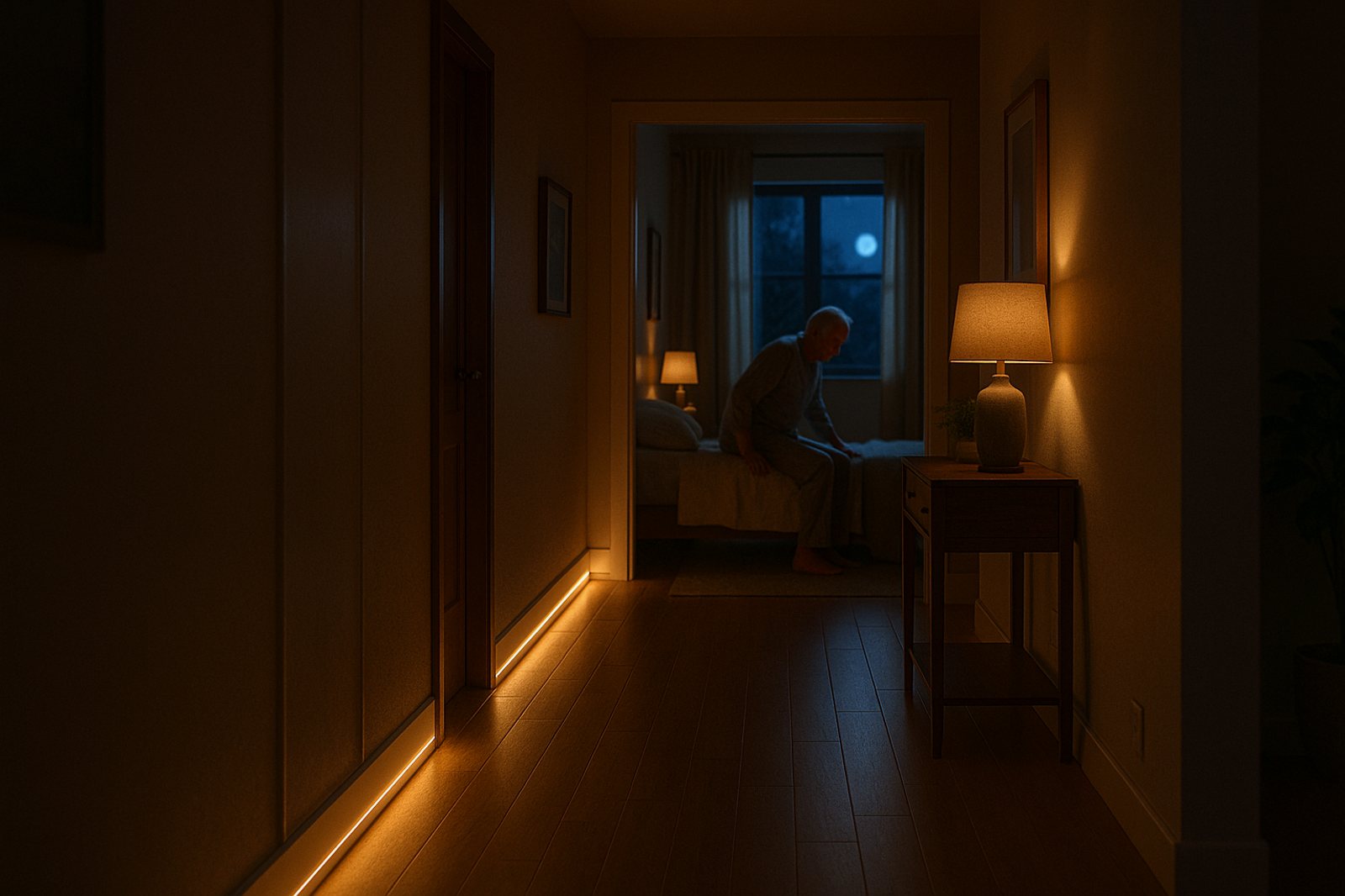
Sleep
The night is half of a person's day and almost none of it is observed. Care Daily reads rest without anything on the body: how long someone slept, how often they were up, how long they were out of bed, and whether they returned to it.
Poor sleep is not just a comfort problem. It carries a materially higher fall risk the following day, which makes the night the earliest place to intervene rather than the last place anyone looks.
Daily activities
The ordinary shape of a day, described by the home itself. Movement between rooms, time in the kitchen, bathroom patterns, whether someone left the house, and whether any of that has drifted from their own normal.
This is where decline shows up first and where it is easiest to reverse. A week of skipped meals or a shrinking indoor map is a conversation. Six months of it is a move to a higher level of care.
Personal safety
The events that change everything, caught in the moment. Falls detected by radar or reported by a button, unattended stoves, water where it should not be, doors at hours that do not fit the person, and lighting that reduces the risk before anything happens.
Safety is the tier most communities buy first, because the cost of missing one event is immediate and obvious. It is also the tier where prevention beats response by an enormous margin.
Personal signals
What a person is willing to tell us directly, and what the devices they already own can contribute. Wearables are optional and welcome: if someone wears a watch or a band, that data joins the same picture rather than living in a separate app.
Clinical signals answer questions the environment cannot, and the environment gives clinical signals a context they usually lack. Neither is sufficient alone, which is the whole argument for fusing them.
Connection
Wellbeing is social, and isolation is measurable. Who visits, who a person eats with, which activities they still turn up to, and whether their circle has been narrowing without anyone saying so.
Loneliness carries health consequences comparable to well-known physical risk factors. It is also the pillar most technology ignores entirely, which is why a wellbeing score built without it is incomplete.
Why five, together
The pillars are not a menu. They are an argument.
Any single pillar produces alerts. All five, measured against one person's own baseline, produce understanding, and understanding is what lets you act early instead of responding late.
One pillar alone
A sensor says movement is low this morning. Is that a problem? Nobody knows. It could be a late night, a visitor, a day off, or the beginning of something serious. So the alert either gets escalated needlessly or it gets ignored, and after a few weeks of that, it always gets ignored.
Five pillars together
Movement is low, sleep was broken and ended late, the kitchen has not been used, the medication routine has not happened, the emergency system reports nothing wrong, and this person has a walking group on Tuesdays that they have now missed twice. That is not an alert. That is a reason to knock on a door.
This is why Care Daily unifies every signal into one common information language before reasoning over it. The pillars describe what to sense. The ambient operating system is what turns them into something a person can act on.
See all five running in one place.
Book a demo and we will walk the five pillars against your setting, whether that is a community, an agency, or a single home.